Fried Croissant Beignets – Easy Sweet Pastry Recipe
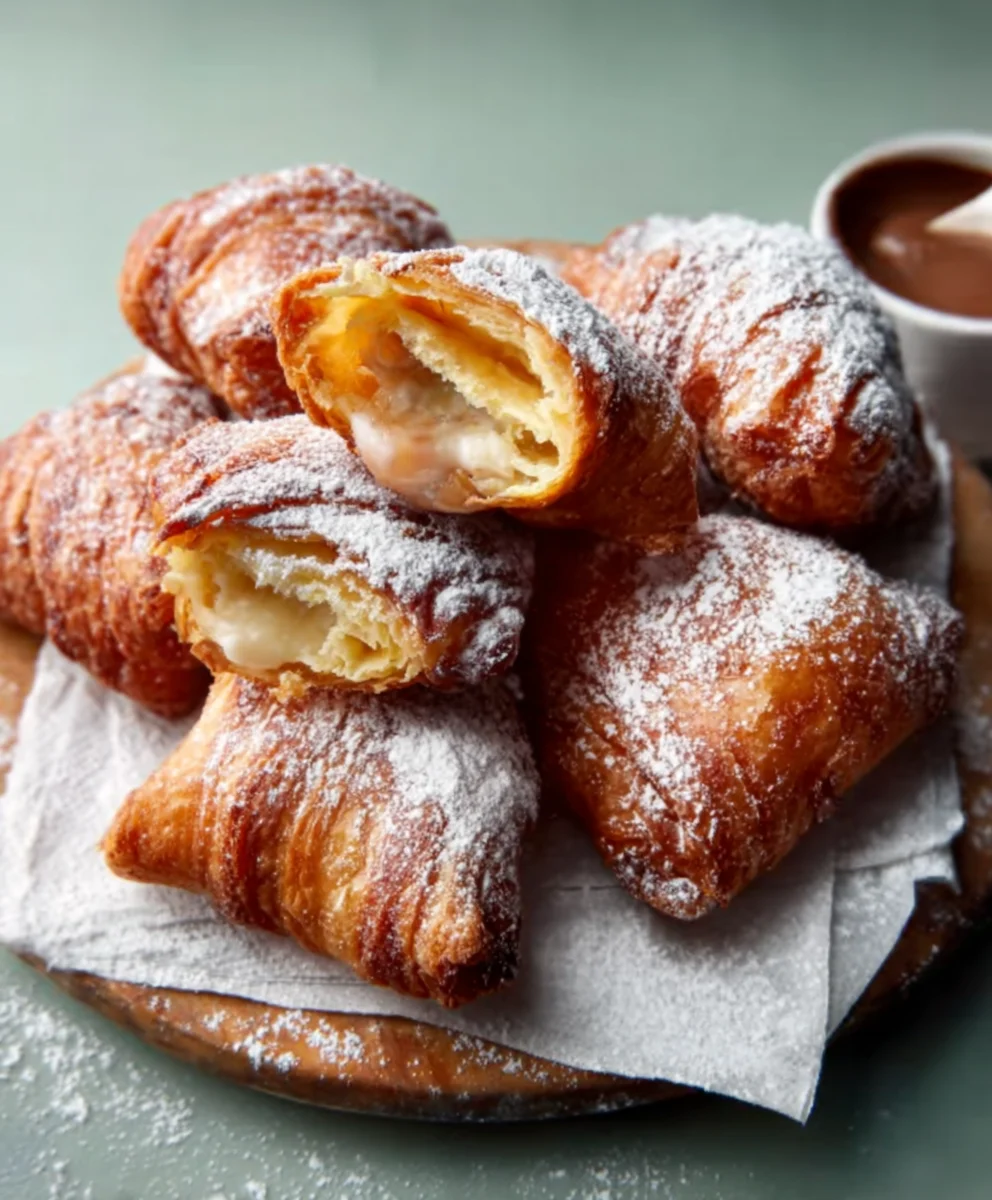
Fried Croissant Beignets are not just a treat; they are an experience. Imagin extracte the delicate, buttery layers of a croissant transformed into ethereal clouds of golden-fried perfection, dusted with a generous snowstorm of powdered sugar. This isn’t your average pastry; it’s a delightful reinvention that takes a beloved classic and elevates it to an entirely new level of indulgence. People adore these because they offer that irresistible combination of familiar comfort and exciting novelty. The inherent richness of the croissant dough, when fried, becomes impossibly light and airy, a stark contrast to the often dense, heavy beignets you might be used to. What truly sets our Fried Croissant Beignets apart is the incredible textural play – the satisfying crunch of the exterior giving way to a tender, almost molten interior. They’re perfect for a special brunch, a decadent dessert, or simply whenever you crave a moment of pure, unadulterated joy.”
Ingredients:
- 60 ml (1/4 cup) milk
- 120 ml (1/2 cup) water
- 21 g (2 tbsp 1 tsp) active dry yeast
- 50 g (1/4 cup) granulated sugar
- 550 g (4 1/2 cups) Manitoba flour (or bread flour)
- 2 large eggs (approximately 120g total)
- 1 large egg yolk (approximately 20g)
- 1 tbsp rum extract extract (optional, for an extra layer of flavor)
- 5 g (3/4 tsp) salt
- 70 g (1/3 cup) unsalted butter, softened
- 750 ml (3 1/2 cups) vegetable oil, for frying
- 80 g (1/3 cup) granulated sugar (for coating)
- 40 g (1/3 cup) powdered sugar (for dusting)
- 1 tsp cinnamon powder
- 350 g (12 oz) Chocolate Spread (like Lino Lada)
Preparing the Dough for Fried Croissant Beignets
Activating the Yeast and Initial Mixing
First, we need to wake up our yeast to ensure our dough will be light and airy, the key to perfect Fried Croissant Beignets. In a small bowl or liquid measuring cup, combine the 60 ml (1/4 cup) of milk and 120 ml (1/2 cup) of water. Gently warm this mixture – it should feel lukewarm, not hot, as excessive heat can kill the yeast. You can do this by microwaving it for about 20-30 seconds, or by heating it on the stovetop very briefly. Once lukewarm, stir in the 21 g (2 tbsp 1 tsp) of active dry yeast and 50 g (1/4 cup) of granulated sugar. Give it a gentle whisk and then let it sit for about 5-10 minutes. You’ll know the yeast is active when it becomes foamy and bubbly on the surface, looking almost like a creamy cap. If you don’t see this foam, your yeast might be old, and it’s best to start again with fresh yeast.
Incorporating the Wet and Dry Ingredients
In the bowl of a stand mixer fitted with the dough hook, or in a large mixing bowl if you’re kneading by hand, add the 550 g (4 1/2 cups) of Manitoba flour (or bread flour). Make a well in the center of the flour. Once the yeast mixture is foamy, pour it into the well. Add the 2 large eggs and the 1 large egg yolk, along with the optional 1 rum extractp of rum extract for that extra hint of deliciousness. Begin extract mixing on a low speed until the ingredients just start to come together into a shaggy dough.
Developing the Dough and Adding Butter
Continue mixing the dough on medium-low speed for about 5-7 minutes. The dough will start to become smoother and more elastic. Now, it’s time to incorporate the richness of the butter. Add the 70 g (1/3 cup) of softened unsalted butter, a few pieces at a time, while the mixer is still running on low speed. Allow each addition of butter to be mostly incorporated before adding the next. This process might take another 5-8 minutes. The dough should eventually pull away from the sides of the bowl and become very smooth, elastic, and slightly tacky. If you’re kneading by hand, this entire process will take considerably longer, perhaps 15-20 minutes of consistent kneading until you achieve a smooth, elastic consistency.
First Rise: Allowing the Dough to Double
Once the dough has reached the desired smooth and elastic texture, lightly grease a clean, large bowl with a bit of vegetable oil. Place the dough in the bowl, turning it to coat all sides with the oil. Cover the bowl tightly with plastic wrap or a damp kitchen towel. Find a warm, draft-free spot in your kitchen for the dough to rise. This usually takes about 1 to 1.5 hours, or until the dough has roughly doubled in size. Patience is key here; a good rise is essential for light and fluffy beignets.
Shaping and Second Rise
Gently punch down the risen dough to release the air. Turn the dough out onto a lightly floured surface. You can roll the dough out into a large rectangle, about 1/4 inch thick, or divide it into smaller portions and roll those out. For classic beignet shapes, you can cut the dough into squares or rectangles of your desired size, about 2-3 inches. Don’t worry about perfection; rustic shapes are part of the charm of homemade Fried Croissant Beignets. Place the cut pieces of dough onto a baking sheet lined with parchment paper, leaving some space between them. Cover them loosely with plastic wrap and let them rise again for another 30-45 minutes, or until they look noticeably puffed up. This second rise is crucial for achieving that signature airy texture.
Frying and Finishing the Fried Croissant Beignets
The Frying Process
Now for the exciting part – frying our beignets! In a heavy-bottomed pot or Dutch oven, pour in the 750 ml (3 1/2 cups) of vegetable oil. Heat the oil over medium heat until it reaches a temperature of 350-365°F (175-185°C). It’s important to maintain this temperature range for even cooking. Use a thermometer to monitor the oil temperature. Carefully slide a few of the risen dough pieces into the hot oil, being careful not to overcrowd the pot. Fry them for about 1-2 minutes per side, or until they are golden brown and puffed up. They should float to the surface and puff considerably.
Draining and Coating
Using a slotted spoon or a spider strainer, carefully remove the fried beignets from the hot oil. Place them on a wire rack set over a baking sheet to allow excess oil to drain away. While the beignets are still warm, prepare your sugar and cinnamon coating. In a shallow bowl or plate, mix together the 80 g (1/3 cup) of granulated sugar, 40 g (1/3 cup) of powdered sugar, and 1 tsp of cinnamon powder. Toss the warm beignets in this mixture until they are generously coated. This step infuses them with that classic sweet and spiced flavor.
Filling with Chocolate Spread
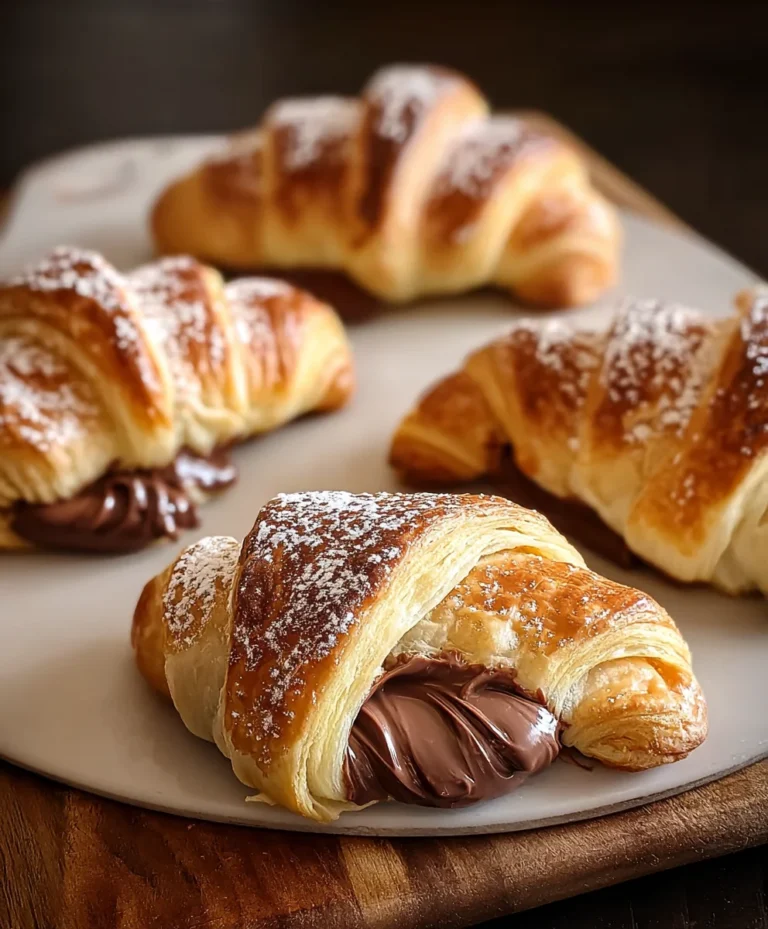
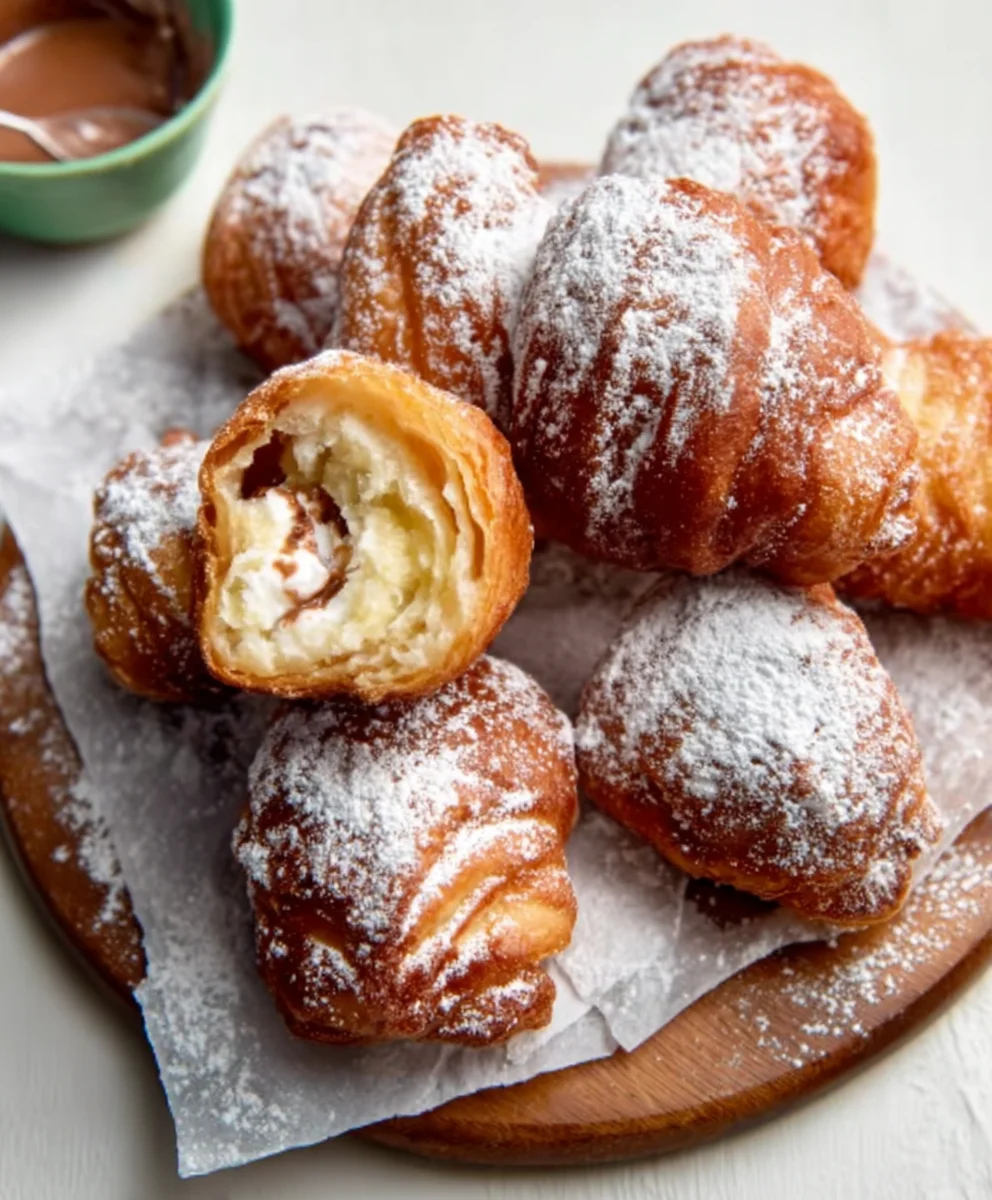
Once the beignets have cooled slightly but are still warm enough to handle, it’s time for the decadent chocolate filling. You can use a piping bag fitted with a long, thin tip, or simply a small knife. Make a small incision in the side of each beignet. Gently insert the tip of the piping bag (or knife) into the incision and fill the beignet with the 350 g (12 oz) of Chocolate Spread. Aim to fill them generously for a truly indulgent experience. If the chocolate spread is too thick to pipe easily, you can gently warm it slightly in a bowl set over simmering water, or for a few seconds in the microwave, stirring until smooth.
Serving Your Delicious Fried Croissant Beignets
Arrange the filled Fried Croissant Beignets on a serving platter. You can dust them with a little extra powdered sugar for a beautiful finish, if desired. These are best enjoyed fresh and warm, when the beignet itself is light and airy, and the chocolate filling is delightfully gooey. They make for a perfect breakfast treat, a delightful dessert, or a special afternoon indulgence.
Conclusion:
And there you have it! You’ve successfully created your very own batch of delicious Fried Croissant Beignets. We hope this recipe has brought a little bit of New Orleans magic into your kitchen. These airy, golden pockets of joy are perfect for any occasion, from a decadent breakfast to a delightful dessert. Don’t be afraid to get creative with your toppings and enjoy every sweet, fluffy bite!
For serving, consider a classic dusting of powdered sugar, a drizzle of rich chocolate sauce, or even a side of seasonal fruit compote. These Fried Croissant Beignets are also wonderful when served warm alongside a hot cup of coffee or café au lait.
Feeling adventurous? Try infusing your dipping sauce with a hint of cinnamon or nutmeg, or add a touch of citrus zest to the dough itself for a brighter flavor profile. The possibilities are truly endless, and we encourage you to experiment and find your favorite way to enjoy these delightful treats.
Frequently Asked Questions:
Can I make the dough ahead of time?
Yes, you can prepare the croissant dough a day in advance and keep it refrigerated. This allows the flavors to meld and can even make the dough easier to handle for shaping. Just be sure to let it come to a slightly more pliable temperature before proceeding with the shaping and frying steps.
What’s the best oil for frying?
A neutral-flavored oil with a high smoke point is ideal for frying your Fried Croissant Beignets. Vegetable oil, canola oil, or peanut oil are excellent choices. You want an oil that can reach and maintain a consistent temperature of around 350-375°F (175-190°C) to ensure the beignets cook evenly and become golden brown without burning.
Fried Croissant Beignets – Easy Sweet Pastry Recipe
An easy recipe for delicious fried beignets with a croissant-like texture, coated in sugar and cinnamon, and filled with chocolate spread.
Ingredients
-
60 ml (1/4 cup) milk
-
120 ml (1/2 cup) water
-
21 g (2 tbsp 1 tsp) active dry yeast
-
50 g (1/4 cup) granulated sugar
-
550 g (4 1/2 cups) Manitoba flour (or bread flour)
-
2 large eggs (approximately 120g total)
-
1 large egg yolk (approximately 20g)
-
1 tbsp rum extract (optional, for an extra layer of flavor, substitute with 1 tsp vanilla extract)
-
5 g (3/4 tsp) salt
-
70 g (1/3 cup) unsalted butter, softened
-
750 ml (3 1/2 cups) vegetable oil, for frying
-
80 g (1/3 cup) granulated sugar (for coating)
-
40 g (1/3 cup) powdered sugar (for dusting)
-
1 tsp cinnamon powder
-
350 g (12 oz) Chocolate Spread (like Lino Lada)
Instructions
-
Step 1
In a small bowl, combine milk and water. Warm gently until lukewarm. Stir in active dry yeast and 50g granulated sugar. Let sit for 5-10 minutes until foamy. -
Step 2
In a stand mixer bowl or large bowl, combine Manitoba flour. Make a well, pour in the yeast mixture, eggs, egg yolk, and optional rum extract (or vanilla extract). Mix on low speed until a shaggy dough forms. -
Step 3
Continue mixing on medium-low speed for 5-7 minutes until smoother. Gradually add softened butter, a few pieces at a time, while the mixer is running on low speed, until incorporated. Mix for another 5-8 minutes until the dough is smooth, elastic, and slightly tacky. If kneading by hand, knead for 15-20 minutes. -
Step 4
Lightly grease a clean bowl with oil. Place dough in the bowl, turning to coat. Cover tightly and let rise in a warm, draft-free spot for 1 to 1.5 hours, or until doubled in size. -
Step 5
Gently punch down the dough. Turn out onto a lightly floured surface and roll into a rectangle about 1/4 inch thick or cut into 2-3 inch squares or rectangles. Place on a parchment-lined baking sheet, cover loosely, and let rise again for 30-45 minutes until puffed. -
Step 6
Heat vegetable oil in a heavy-bottomed pot to 350-365°F (175-185°C). Carefully fry beignets in batches for 1-2 minutes per side, until golden brown and puffed. Do not overcrowd the pot. -
Step 7
Remove fried beignets with a slotted spoon and drain on a wire rack. In a shallow bowl, mix together 80g granulated sugar, powdered sugar, and cinnamon powder. Toss warm beignets in the mixture to coat generously. -
Step 8
Once slightly cooled but still warm, make a small incision in each beignet and fill generously with Chocolate Spread using a piping bag or a small knife. Gently warm the spread if needed.
Important Information
Nutrition Facts (Per Serving)
It is important to consider this information as approximate and not to use it as definitive health advice.
Allergy Information
Please check ingredients for potential allergens and consult a health professional if in doubt.